 EASEL
EASELWhy it is still your face
A picture that keeps your face but stays a photograph is a failure. So is a beautiful painting of somebody else. Everything interesting in Easel happens between those two.
Ask an image model to make a photograph look like an oil painting and it will happily do it. Ask it to keep the person in the photograph recognisable and it will do that too. Ask for both in the same breath and you find out that they are not independent requests.
The failure we kept hitting
The obvious way to protect a likeness is to tell the model to leave things alone: preserve the colours, the shadows, the background layout, do not move anything. It reads like caution. In practice it is the instruction that ruins the picture.
What comes back is a retouched photograph. The model has been told, in effect, that its job is to change as little as possible — so it changes as little as possible, and you have spent a credit on a slightly warmer version of the picture you already had.
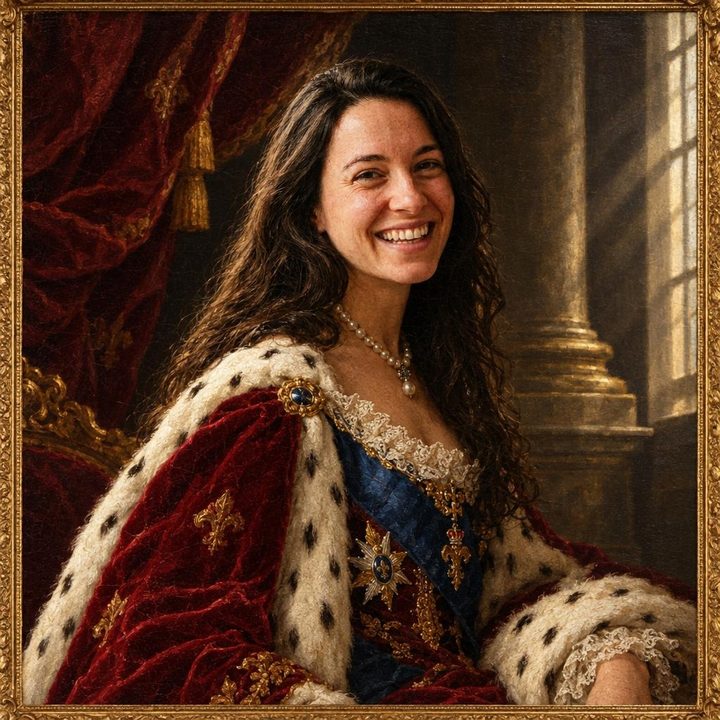
Scoping the protection
The fix was to stop protecting the whole image and protect only the part that has to survive. Every Easel look ends with the same clause, and it names exactly what may not move: the face, feature by feature — the same proportions, the same expression, the same apparent age, the same skin tone, the same hair. Where several people are in frame, each keeps their own complexion rather than drifting toward one another. The pose, the count of people and objects, and the overall composition stay put.
And then it says the opposite about everything else. Surface, texture, line, light and palette should be reinterpreted fully and confidently in the medium the look describes. Render the medium wholeheartedly. A result that still looks like a photograph is a failure.
Nobody is slimmed, smoothed, lightened or idealised. That is in the clause too, and it is there deliberately: a model asked to make someone look good will quietly make them look like someone else.
When the background has to go
Some looks cannot keep the composition, because replacing the surroundings is the whole point — you on the Moon, you underwater, you in Venice. Losing the background also removes the anchor that keeps a likeness steady, so those looks override the usual rule with a stricter one: hold the person harder precisely because everything around them is being thrown away.
What this means when you use it
It means you can pick the most extreme look in the catalogue — claymation, brick figure, cave painting — and still recognise the person in it. The medium is allowed to go as far as it likes. The face is not up for negotiation.